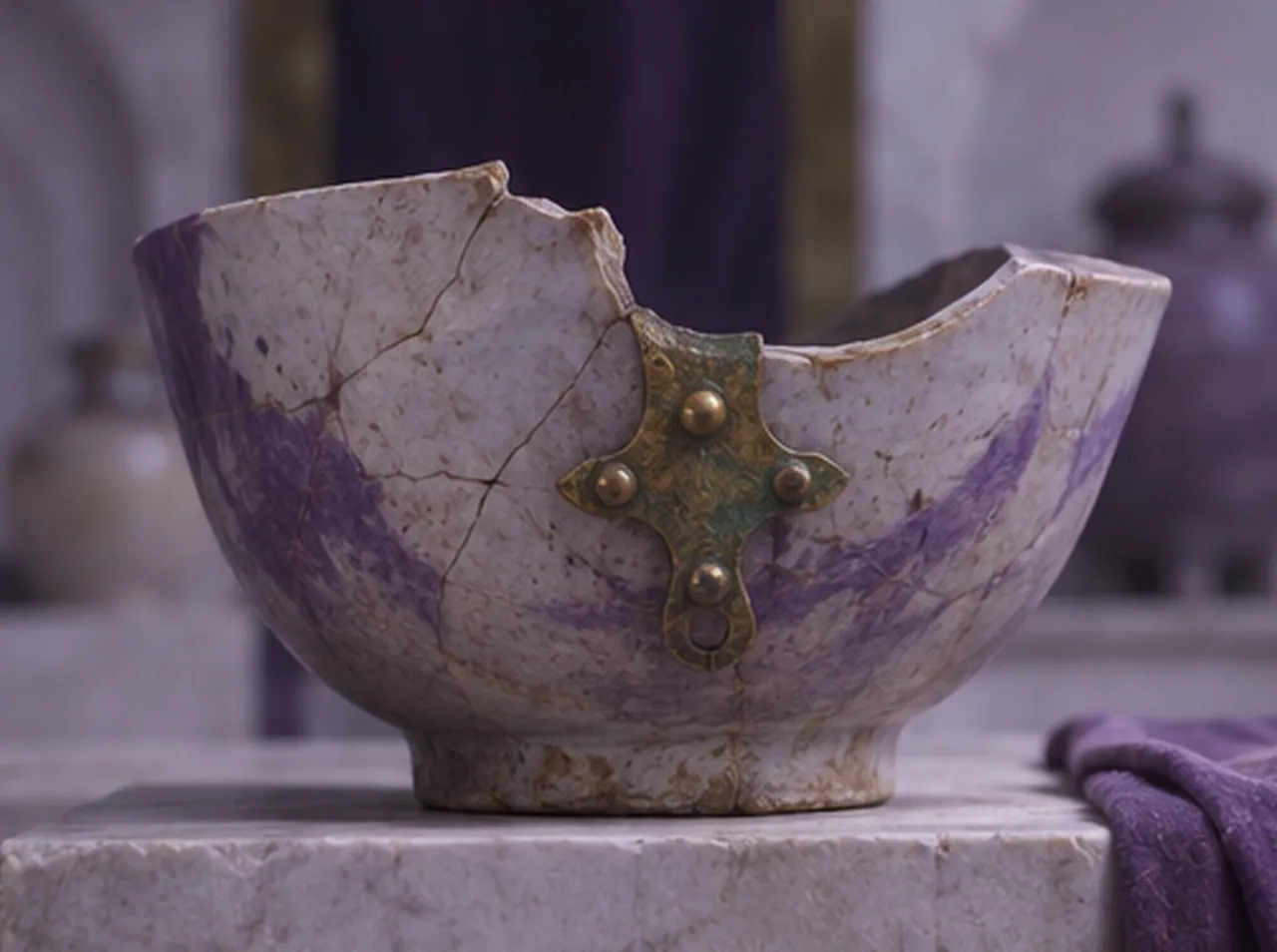
Cup Wear before the Seal
The cup in this prototype is small enough to fit sideways beneath the rim of an old parcel. That left a raised lip around a tear which was quite easy to see while the cup and the wrapper were still together. After the two were separated, the easiest thing to notice was the fine new seal on the cap. We needed a short walk that would give the earlier damage some weight in the investigation. The sequence begins with the cup, walks away from it, and then makes room to look at the same surface from a different side.
Inspect the part that took the weight
Set the cup on a felt block without the seal in view. A small missing part of the lip catches against the block. It is possible to place a broken line on a drawing of the cup before following what it meant. A player reaching through the wrapping only has access to part of that edge. Let them rotate it in their hands to see a short flattened patch just under the cut. This makes the wear recognizable when the cloth lifts farther down the hall. A dark area by itself would be too easy to replace with any convenient patch on a broken object.
Carry the shape into the next space
The first loop of An Artifact Changes Hands follows a cord when its parcel moves along a rail. We gave the cup similar support by keeping a drawing of the stretched cloth. The dip in the cloth can have a fixed place on a bench. When the player sets the cup nearby, there is a way to see that the tear came from the side under tension. The player does not need to fit the whole object at once. The shape may identify where a holder set it down, or give them a better idea which way the wrapper faced when its seal went on.
Compare the seal on its own terms
A clean impression is evidence that somebody used a particular seal. If it can come off the cup as a ring, its identity can change without relocating the worn lip at all. We drew that seam as a separate surface and put a small shadow between the cap and the cup. A person can then look at the possible transfer without losing track of the object the mark claims to describe. Three Ways to Tell the Handoff gives a spoken version of the same problem. A voice can provide a timestamp or a person, but another account may connect the material to a different route.
Read the wear in ordinary light
Keeping the brightest light on the fine seal made the cup less legible. The edge now receives a lower broad sidelight. Shallow shadows show which part of the broken rim can meet the cloth. The shape remains readable in the current sketches from behind and in a cropped view on a smaller screen. Covering the front face in the model also helps settle which damage anybody could have noticed before holding it. That is important if a character later says the cup passed the counter without being taken out of its wrapping.
Leave one question for the next review
At the end of a walk, regard the wear as an observation that belongs to a particular surface and time. Ask the player to describe how the cup sat inside its wrapping before explaining who held it. If they can trace the clipped edge and the tension on the cloth, the exercise has supplied a handoff clue. If they keep finding the seal first, the next version needs to give the player room to inspect the weight-bearing edge. We want the case to remain playable even if the latest seal says very little about the route.