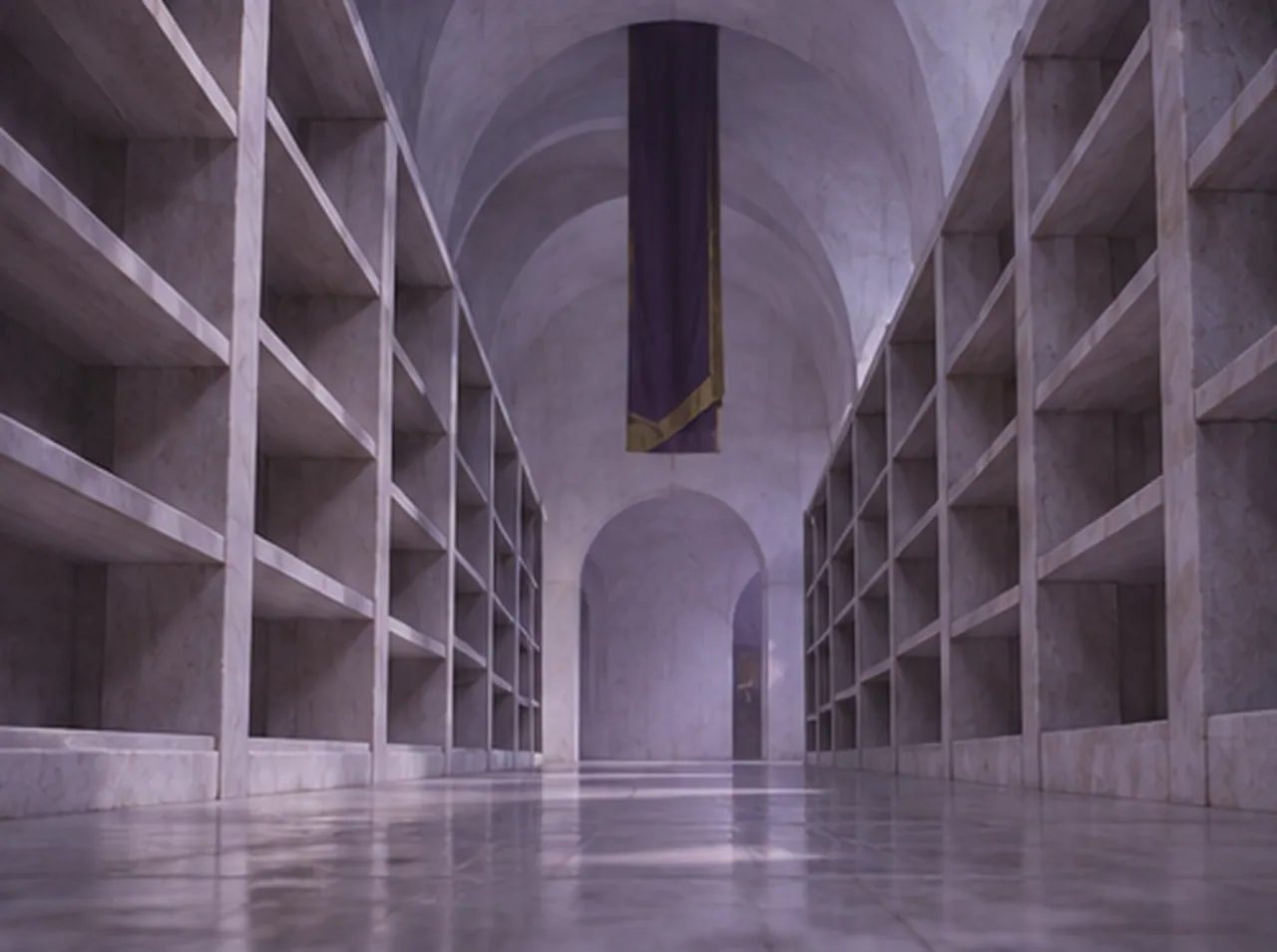
Archive Table
A first drawing for a Relgem Studios adventure often shows the underside of an ordinary fixture. A groove in a rail suggests where a parcel could have rested. A flat clasp might reveal that nobody used it after the old cloth was cut away. Those surfaces give somebody looking for a relic something to begin with. The artifact can remain indistinct while a sequence of people, uses, and places starts to form around it.
Build the route from stops that do work
On the archive table a length of paper has enough space for a few stops. Each needs a reason to change the seeker’s account. A gate might show that an old cord can pass under a lip. A depot might have several boxes that all take the same seal. When two props play the same part, one can move out of the way and let the player check another kind of clue. The route needs a mixture of materials, spoken accounts, and places to look from. Redrawing it at tabletop size is an early way to see whether the stops are doing different work.
Give each role a distinct question
A design role fits evidence to a possible action. Environment art puts particular wear on an object and locates the edge of a room. The narrative role describes what a former keeper could have seen from a particular seat. A prototype review looks for any leap between the observed trace and the explanation a room seems to demand. These are areas of responsibility for the adventure concept. The table can support a small paper trial or a narrow room that somebody walks.
Archive the first account alongside the revision
Visit Three Ways to Tell the Handoff for an example of what a spoken account can preserve while its order shifts. The Unnumbered Storage Walk starts with a physical route where that order can be checked. The ledger gives each note a fixed date, making it straightforward to keep one near another. Keeper Trails collects case fragments next to their larger concepts and lets a visitor approach the same topic through a prop.
A visit to the desk can begin with one mark, a corner, or a question about the archive. Send a Provenance Note lists the details that help place a correspondence about a work in progress.